
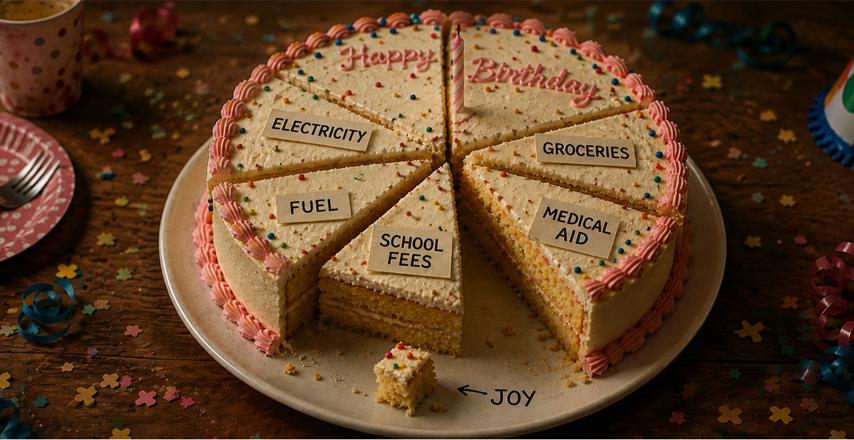
The Cost of Living Is Killing Our Joy
It’s a national mood
There’s a particular kind of silence that has settled into many South African households. It’s not the absence of noise, but the quiet calculation behind every decision: “Can we afford this? Should we wait? What do we cut next?”
It shows up at the grocery store, at the petrol station, in WhatsApp groups where friends debate whether to cancel plans. It’s subtle, but persistent and according to the data from our latest Vantage Point 2026 survey, it is widespread. Where 70% of respondents identified the economy as their primary source of anxiety.
The Joy Tax
Respondents have downgraded their definition of a good life. There’s a hidden cost implanted in this economic reality, what we might call a “joy tax.” It’s not measured in rands and cents, but in experiences deferred, moments scaled back, and dreams quietly put on hold for much more pressing issues such as health and having enough money in the pocket to survive. When you think about it, family dinners out become rare occasions, travel plans now turn into “maybe next year” and personal milestones are celebrated more modestly or not celebrated at all.
This is where the economic narrative becomes deeply human, people are not just cutting expenses; they are cutting joy. When defining success, respondents ranked health first (66%). Having no debt comes second (59%). Having peace of mind and low stress sits at 58%. Living according to one’s values follows at 57%, neck-and-neck with having enough disposable income to enjoy life.
The Happy-but-not-okay Paradox
With 70% of the respondents identifying themselves as happy, happiness, as researchers have long known, is a stubborn thing to measure. People adapt, they find joy in small mercies, a paid-up car, a child’s laugh, a braai on a Sunday even as the larger picture darkens around them. So, the happiness number isn’t a lie. It’s a measure of resilience but resilience is not the same thing as wellbeing.
When the same survey asks people to list their biggest current life pressures, the picture sharpens immediately: 60% say money and finances. Health concerns come second at 38%. Work stress, parenting, caring for elderly relatives, all of these are dwarfed by the simple, grinding question of whether the bank balance will hold until month-end. What we are looking at, in other words, is a country that has learned to be happy despite its circumstances rather than because of them.
The Rise of Careful Consumption
Picture yourself as Tshepo, a young, digitally savvy, and highly informed professional. He tracks prices, compares brands, and hunts for value relentlessly. Tshepo hasn’t stopped spending, but every purchase he does is done so deliberately.
He represents a broader behavioural shift, where consumption is no longer carefree; it’s calculated. This has profound implications, brands are scrutinised more than ever, loyalty becomes fragile and value wins. Emotional purchases are replaced by rational trade-offs. In other words, the economy isn’t just changing what people buy, it is changing how they think about buying.
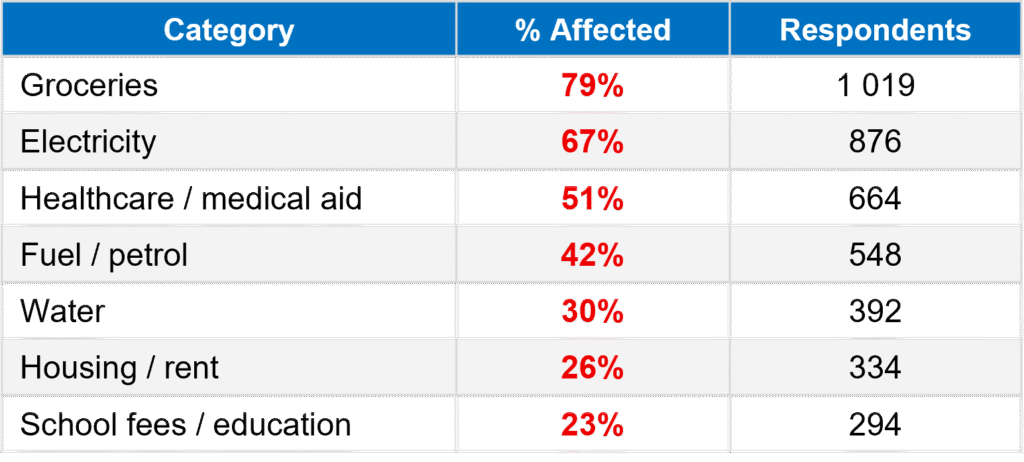
Ask people where the cost increases hit hardest, and the answer is brutally specific. It isn’t luxury, it isn’t lifestyle creep. It is the trolley, the prepaid meter and the medical aid debit order, the three places a household can least afford to flinch.
Where Cost Increases Hit Hardest
Why This Should Worry All of Us
It would be tempting to file this under “economic story” and move on. That would be a mistake. Financial pressure does not stay in its lane. Already, 37% of respondents flag mental health challenges, stress, burnout, anxiety, and depression as one of their primary fears, sitting alongside crime and corruption in the national worry index. The cost-of-living crisis is also, quietly, a mental health crisis.
For brands, the implication is uncomfortable but important: the consumer you are talking to is not the consumer of five years ago. Aspirational marketing built on luxury, indulgence and “treat yourself” messaging will increasingly miss not because people don’t want those things, but because a fifth of them have nothing left to treat themselves with. Value, dignity, and genuine relief from pressure will outsell aspiration almost every time.
For employers, the lesson is sharper still. A workforce in which 28% are in survival mode and 60% cite money as their biggest life pressure is not a workforce running at full capacity. Financial wellness programmes, real-rand salary reviews, and benefits that ease the load (medical, transport, education) are no longer perks. They are productivity infrastructure.
And for the rest of us, friends, family, and neighbours. The data is a reminder to be gentle. The colleague who declined the lunch invitation, the cousin who skipped the family holiday, the friend who has gone quiet on the group chat, they may not be antisocial. They may simply be doing the maths.
The Conclusion
There is something deeply South African about this picture. We are happy, we are also, by our own admission, frightened about money in a way that is reshaping every other part of our lives. Our health, our dreams, our definitions of success, the small joys we used to allow ourselves.
Happiness without breathing room is a fragile thing. The cost of living, as the data makes plain, is not just eroding bank balances. It is eroding joy itself. Quietly, one grocery shop and one electricity top-up at a time. The question is no longer whether South Africans can keep smiling. We have proven, repeatedly, that we can. The question is whether anyone, government, business, civil society, is going to give us something more than resilience to smile about.
About This Research
The Vantage Point 2026 study is a comprehensive market research survey conducted by Bateleur Brand Planning to understand South African consumer, employee, and societal sentiment. Data was collected online between October 2025 and January 2026 via social media and the Bateleur database, reaching 1 298 middle-to-upper income South Africans.
Data sources referenced in this article are drawn from the full Vantage Point 2025/2026 dataset. For more information or to explore custom analyses, contact Bateleur Brand Planning at contactus@batbrand.co.za
If you enjoyed this article, signup below to receive more:-